News

The working principle of the check valve.

2026-01-24 0 Leave me a message

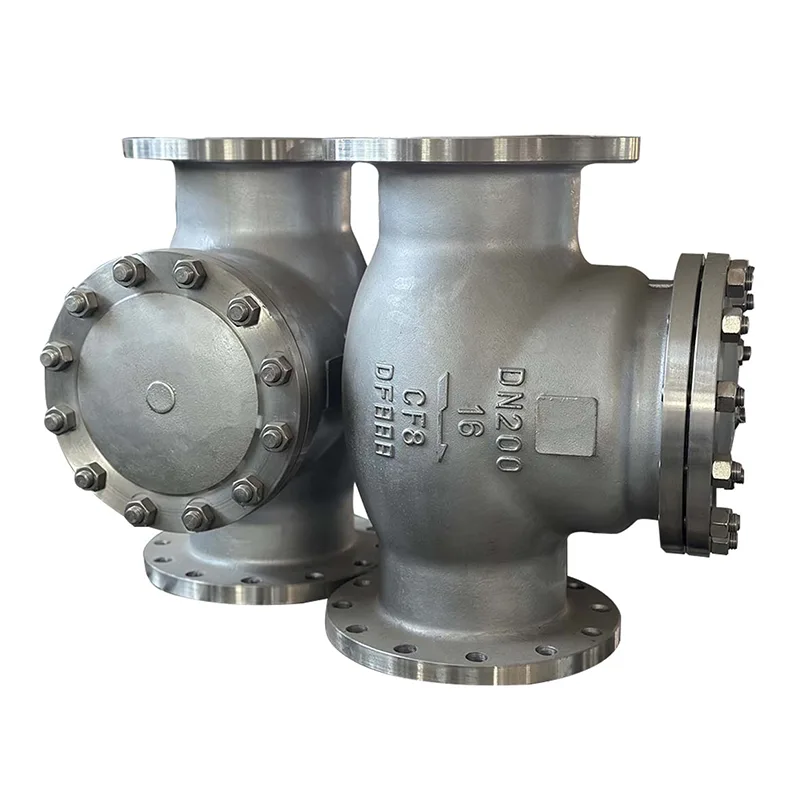
Check valves can also be used on pipes where the pressure in the auxiliary system may rise above the system pressure. Check valves can be mainly classified into swing check valves (which rotate around the center of gravity) and lift check valves (which move along the axis).


The function of this type of check valve is to allow the medium to flow in only one direction and prevent reverse flow. Usually, this valve operates automatically. Under the pressure of the fluid flowing in one direction, the valve disc opens; when the fluid flows in the opposite direction, the fluid pressure and the self-weight of the valve disc act on the valve seat, thereby cutting off the flow.


The check valve is one such type of valve. It includes swing check valves and lift check valves. The swing check valve has a hinge mechanism and a valve disc that freely rests against the inclined valve seat surface like a door. To ensure that the valve disc can always reach the appropriate position on the valve seat each time, the valve disc is designed with the hinge mechanism so that the valve disc has sufficient space for swinging and can truly and completely contact the valve seat. The valve disc can be made entirely of metal or can have leather, rubber, or a synthetic cover laminated onto it, depending on the requirements of performance.


When the swing check valve is fully open, the fluid pressure is almost unobstructed, so the pressure drop across the valve is relatively small. The disc of the lift check valve is located on the sealing surface of the upper valve seat of the valve body. This valve, apart from allowing the disc to freely rise and fall, has the same structure as a stop valve. The fluid pressure causes the disc to lift off the sealing surface of the valve seat, and the return of the medium causes the disc to fall back onto the valve seat and cut off the flow.


Depending on the operating conditions, the valve disc can be of a fully metal structure or in the form of a rubber pad or rubber ring embedded on the valve disc frame. Like a stop valve, the flow passage of the lift check valve is also narrow, so the pressure drop through the lift check valve is greater than that of the swing check valve, and the flow restriction of the swing check valve is very little.


Related News
Leave me a message
X
We use cookies to offer you a better browsing experience, analyze site traffic and personalize content. By using this site, you agree to our use of cookies. Privacy Policy
Reject Accept